

As of early 2026, the global spacecraft market has transcended its historical identity as a government-monopolized niche, maturing into a diversified, high-growth pillar of the “New Space” economy. Valued at approximately $551.2 billion in 2026 (within the broader space technology context), the specific spacecraft segment—encompassing manned and unmanned vehicles—is projected to grow at a Compound Annual Growth Rate (CAGR) of 5.7% through 2034.
This article examines the structural shifts, technological breakthroughs, and regional dynamics that are making 2026 a “breakout year” for space exploration and commercial utilization.
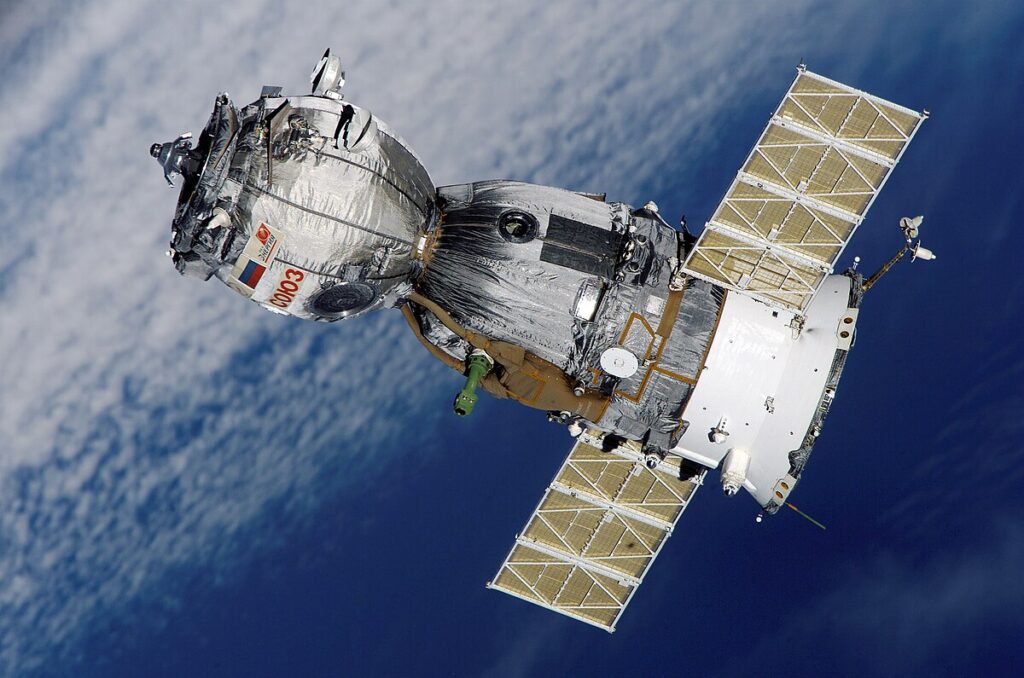
Market Statistics and Forecast (2025–2034)
The market is currently fueled by a record number of satellite deployments and a surge in crewed orbital missions. While the broader space economy is valued in the hundreds of billions, the specific spacecraft manufacturing and services sector is seeing rapid consolidation and innovation.
| Metric | 2025/2026 Estimate | 2034 Projection |
| Space Technology Market (Global) | $551.20 Billion | $1,012.13 Billion |
| Spacecraft Segment Value | ~$6.76 Billion | ~$8.44 Billion |
| Projected CAGR | 5.7% – 7.8% | (2025–2034) |
| Dominant Sector | Commercial | (~68% market share) |
Strategic Growth Drivers in 2026
The Commercialization of LEO and MEO
The transition from government-led missions to commercial ventures is the market’s primary engine. In 2026, the demand for Low Earth Orbit (LEO) spacecraft is at an all-time high, driven by:
-
Satellite Constellations: Mega-constellations for global 5G/6G broadband and Earth observation.
-
In-Orbit Services: A burgeoning market for satellite refueling, life extension, and debris removal.
-
Space Tourism: With over 15,000 bookings already active in 2025, the demand for human-rated spacecraft is expanding beyond NASA and ESA to private providers.
National Security and Defense Budgets
Geopolitical tensions have spurred a “Space Race 2.0.” Government agencies are shifting toward resilient space architectures. Instead of a few large, expensive satellites, defense departments are commissioning hundreds of “miniaturized” spacecraft that are harder to target and cheaper to replace. 2026 is seeing significant funding from the U.S. Space Force and similar agencies in India and China for secure communication and infrared missile tracking.
Launch Economics: The SpaceX and Rocket Lab Effect
The reduction in launch costs has lowered the barrier for spacecraft deployment. The reusability of boosters—exemplified by SpaceX’s Falcon 9 and the much-anticipated 2026 operational milestones for Rocket Lab’s Neutron—has made it financially viable for startups to launch specialized spacecraft for mining, research, and manufacturing.
Key Technological Trends
Space Robotics and Autonomous Systems
2026 marks a peak in the adoption of Space Robotics, a segment growing at over 10% annually.
-
Autonomous Docking: New spacecraft are equipped with AI-driven navigation systems that allow for autonomous docking and repair without human intervention.
-
Robotic Arms: Standardized robotic manipulators are now being integrated into cargo modules for the assembly of commercial space stations.
Advanced Propulsion: Beyond Chemical Rockets
The “Propulsion Revolution” is enabling longer missions with less fuel.
-
Electric and Ion Propulsion: Now standard for station-keeping and deep-space probes, offering high efficiency for long-duration travel.
-
Nuclear Space Technology: Startups like Stellar Nuclear are gaining traction in 2026, developing microreactors to power deep-space habitats and high-thrust thermal propulsion.
Satellite Miniaturization
The “CubeSat” and “SmallSat” revolution continues. In 2026, modular spacecraft designs allow for “Plug-and-Play” payloads, reducing the time from design to launch from years to just months.
Market Segmentation
By Type
-
Unmanned Spacecraft: Dominates the market (over 80% share), including communication satellites, weather monitors, and deep-space probes.
-
Manned Spacecraft: Growing rapidly due to private orbital stations (like those from Axiom Space and Blue Origin) and lunar exploration programs.
By End-User
-
Commercial: The largest and fastest-growing segment, focused on telecommunications, imaging, and tourism.
-
Military/Government: Focuses on reconnaissance, secure data transfer, and scientific exploration (Mars/Lunar missions).
Regional Insights
North America: The Established Leader
North America continues to hold over 55% of the market share. The region benefits from a mature ecosystem of “Space Primes” (Lockheed Martin, Boeing, Northrop Grumman) and aggressive disruptors (SpaceX, Blue Origin, L3Harris).
Asia-Pacific: The Fastest Growing Hub
With a CAGR of nearly 9.6%, the Asia-Pacific region is the industry’s most dynamic theater.
-
India: A global leader in cost-effective launches and modular spacecraft manufacturing.
-
China: Rapidly expanding its own satellite constellations and lunar infrastructure.
-
Japan: Emerging as a hub for advanced satellite mesh networking and optical laser communication.
Competitive Landscape
The market in 2026 is a blend of “Heritage” and “New Space” players:
-
SpaceX: The market leader in launch frequency and constellation management (Starlink).
-
Rocket Lab: Becoming a dominant “services” firm for government and commercial payloads.
-
AST SpaceMobile: A key player in the direct-to-cell satellite broadband market.
-
Thales Alenia Space / Airbus: Leading the European market in high-tech telecommunications and Earth observation.
-
New Startups to Watch: Andromach (reusable suborbital vehicles), Impulse Space (last-mile delivery in orbit), and Flywheel Aerospace (modular CubeSats).
Challenges and Market Restraints
-
Space Debris: The risk of “Kessler Syndrome” (cascading collisions) is a primary concern, driving a new sub-market for De-orbiting and Debris Removal.
-
Spectrum Congestion: As thousands of spacecraft enter LEO, managing radio frequency interference is becoming a major regulatory and technical hurdle.
-
Capital Intensity: Despite lower launch costs, the R&D for spacecraft remains incredibly high, making the sector sensitive to interest rate fluctuations and venture capital cycles.
Conclusion: The Orbital Frontier in 2026
The spacecraft market in 2026 has reached a state of “sustainable velocity.” The focus is no longer just on getting to space, but on staying and working there. As we look toward the 2030s, the integration of AI-driven disaster management, lunar mining pilot projects, and global mesh networks will turn the spacecraft from a simple vehicle into the essential hardware of a truly space-based global economy.
Other Report Zion Market Research:
https://www.zionmarketresearch.com/de/report/pipeline-transportation-market
https://www.zionmarketresearch.com/de/report/disposable-urine-bags-market
https://www.zionmarketresearch.com/de/report/eyewear-market
https://www.zionmarketresearch.com/de/report/mobile-banking-market
https://www.zionmarketresearch.com/de/report/high-net-worth-household-insurance-market