

The automatic filament winding machines market is experiencing strong growth due to rising demand for lightweight, high-strength composite materials across multiple industries. Manufacturers are increasingly replacing traditional metal components with advanced composites to improve performance, reduce weight, and enhance durability. This shift is especially evident in aerospace, automotive, energy, and industrial manufacturing sectors. Additionally, the global push toward automation and smart manufacturing is encouraging companies to invest in automated composite fabrication technologies that improve precision, consistency, and production efficiency.
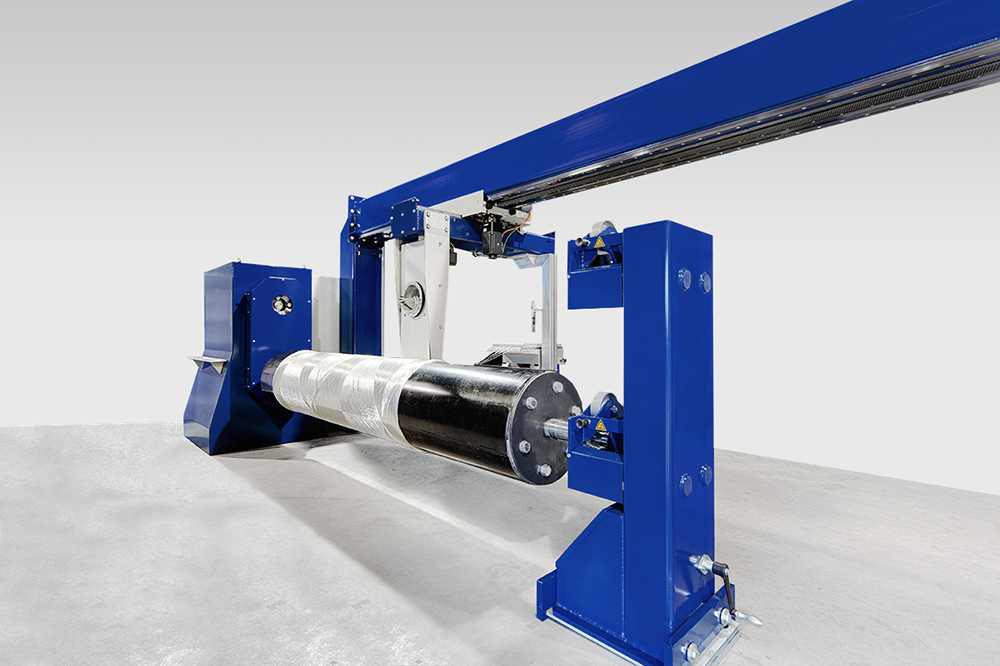
Growing investments in renewable energy infrastructure, particularly wind energy and hydrogen storage systems, are also accelerating market expansion. Filament winding machines play a critical role in manufacturing pressure vessels, tanks, and structural components used in these applications, further strengthening market demand.
What Is the Automatic Filament Winding Machines Market?
The automatic filament winding machines market refers to the global industry focused on manufacturing and supplying automated equipment used to produce composite components through a controlled winding process. These machines wind resin-impregnated fibers such as carbon fiber, glass fiber, or aramid fiber around a rotating mandrel in predefined patterns to achieve specific mechanical properties.
Automatic filament winding machines are widely used to manufacture cylindrical and complex composite structures that require high strength, stiffness, and dimensional accuracy. Their automated operation minimizes human error, improves repeatability, and supports high-volume production, making them essential for modern composite manufacturing.
What Is the Market Size and Growth Outlook?
According to market analysis, the global automatic filament winding machines market was valued at approximately USD 1.80 billion in 2024. It is projected to reach around USD 4.66 billion by 2034, growing at a compound annual growth rate of about 12.6 percent during the forecast period.
This strong growth outlook reflects increasing adoption of advanced composite manufacturing technologies and rising demand from end-use industries that prioritize performance optimization and material efficiency.
How Do Automatic Filament Winding Machines Work?
Automatic filament winding machines operate by precisely controlling fiber placement, winding angle, resin application, and curing processes. Computer-controlled systems guide the movement of fibers onto a rotating mandrel, ensuring consistent tension and accurate layering. Once winding is complete, the composite structure is cured to achieve the desired strength and shape.
Modern machines integrate CNC controls, sensors, and digital interfaces, enabling real-time monitoring, reduced material waste, and enhanced production flexibility. These capabilities align well with Industry 4.0 initiatives and smart factory environments.
What Are the Key Market Drivers and Dynamics?
Key growth drivers include increasing demand for lightweight components, rapid expansion of the renewable energy sector, and rising adoption of automation in manufacturing. The automotive industry’s shift toward electric vehicles is also boosting demand for composite components produced using filament winding technology.
However, the market faces challenges such as high initial investment costs, technical complexity, and the need for skilled operators. Despite these restraints, ongoing technological advancements and economies of scale are gradually reducing barriers to adoption.
How Is the Market Performing Across Regions?
Asia Pacific dominates the automatic filament winding machines market due to rapid industrialization, expanding aerospace and automotive sectors, and significant investments in renewable energy projects. Europe holds a strong position driven by advanced manufacturing capabilities and stringent efficiency standards. North America remains a key market supported by innovation, research activities, and high adoption of automation technologies, while emerging regions are showing steady growth potential.
Conclusion
The automatic filament winding machines market is growing because it supports the global transition toward advanced composites, automation, and sustainable manufacturing. With expanding applications across high-performance industries and strong regional demand, the market is expected to maintain its upward trajectory throughout the forecast period.