

The global Fermenters Market is expanding steadily, driven by increasing demand for biotechnology applications in pharmaceuticals, food & beverage fermentation, and industrial bioprocessing. According to Zion Market Research’s Fermenters Market Size, Share, Trends, Growth & Forecast 2034 report, the market is projected to grow at a 5.60% CAGR from 2025 to 2034, reaching approximately USD 2.64 billion by 2034 from USD 1.71 billion in 2024. Key players are differentiating through technological innovation, product portfolio expansion, and regional market penetration to serve evolving fermentation needs across sectors.
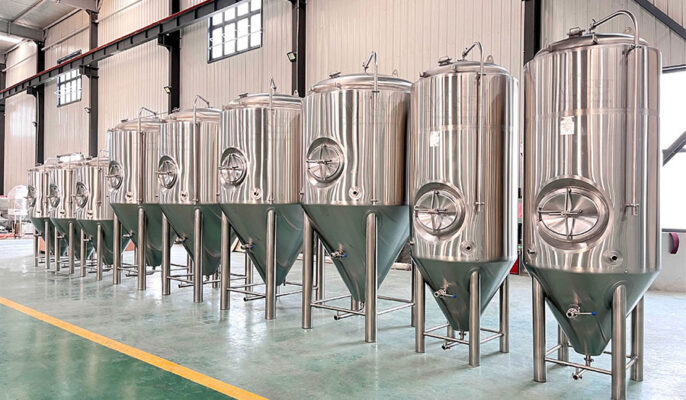
Top Market Players in the Global Fermenters Market
Below is a concise, data-driven profile of the leading companies shaping the competitive landscape of the fermenters market, as identified in the Zion Market Research report.
1. Applikon Biotechnology
A pioneer in advanced fermenter and bioreactor solutions, Applikon Biotechnology focuses on scalable systems suited for research, pilot, and industrial applications. The company emphasizes modular designs and automation to meet diverse fermentation process requirements.
2. Bioengineering AG
Bioengineering AG delivers robust fermenters tailored for microbial and cell culture processes. Its offerings are widely utilized in pharmaceutical manufacturing and R&D, emphasizing precision control and scalability.
3. Cytiva
Cytiva (formerly part of GE Life Sciences) provides a broad portfolio of bioprocessing equipment, including fermenters integrated with high-performance control systems. Its solutions support biologics development and large-scale fermentation.
4. Eppendorf AG
Eppendorf AG offers laboratory-scale fermenters and bioreactors renowned for reliability and ease of use. The company focuses on solutions that support academic research and small-scale production workflows.
5. Merck KGaA (Millipore)
Merck’s bioprocessing division (including Millipore) supplies high-end fermenters with integrated sensors and process control, targeting pharmaceutical and biotechnology sectors requiring stringent quality standards.
6. Ollital Technology
Ollital Technology specializes in customizable biofermentation equipment designed for diverse microbial applications, from R&D to industrial biotechnology processes.
7. Parr Instrument Company
Parr Instrument Company provides durable, high-precision fermenters often used in research and industrial settings. Known for robust engineering, the company supports complex fermentation processes.
8. Sartorius AG (incl. Sartorius Stedim Biotech)
Sartorius AG offers a wide range of automated fermenters and bioreactors, focusing on flexible, scalable platforms for cell culture and microbial fermentation across pharmaceutical and biotech industries.
9. Solaris Biotech
Solaris Biotech supplies compact, high-performance fermenters and bioreactor systems that cater to both research laboratories and early-stage production environments.
10. Bionet (BioNet)
Bionet provides cost-effective fermentation systems for academic and industrial laboratories, with a focus on reliability and user-friendly operations.
11. ZETA Holding (ZETA GmbH)
ZETA Holding develops advanced fermenters emphasizing precision process control and modular design, supporting a range of applications from research to commercial production.
12. PBS Biotech
PBS Biotech focuses on innovative fermentation systems that enhance oxygen transfer and mixing efficiency, particularly for high-value pharmaceutical and biotech processes.
13. Shanghai Bailun Biological Technology
This company offers fermenters tailored to growing Asian biotechnology and industrial fermentation markets, emphasizing competitive pricing and regional support.
14. Zhengzhou Laboao Instrument Equipment (LABAO)
LABAO supplies a diverse range of laboratory and industrial fermenters, targeting educational, research, and industrial applications with cost-effective equipment.
15. Finesse Solutions
Finesse Solutions provides integrated fermentation systems with a focus on automation and data analytics for optimized process performance across biotech and industrial users.
Competitive Landscape & Strategic Positioning
The fermenters market remains fragmented and technology-driven, with global and regional players competing on automation, scalability, and customization. Manufacturers are prioritizing development of advanced process control systems, single-use fermentation technologies, and modular platforms to address expanding applications in pharmaceuticals, biologics, and food fermentation. Partnerships, product innovation, and regional expansion are key strategies driving market positioning.
As demand for biologics, fermented foods, and sustainable bio-based products rises, industry players are focusing on R&D investments and strategic collaborations to enhance their offerings and capture emerging opportunities.